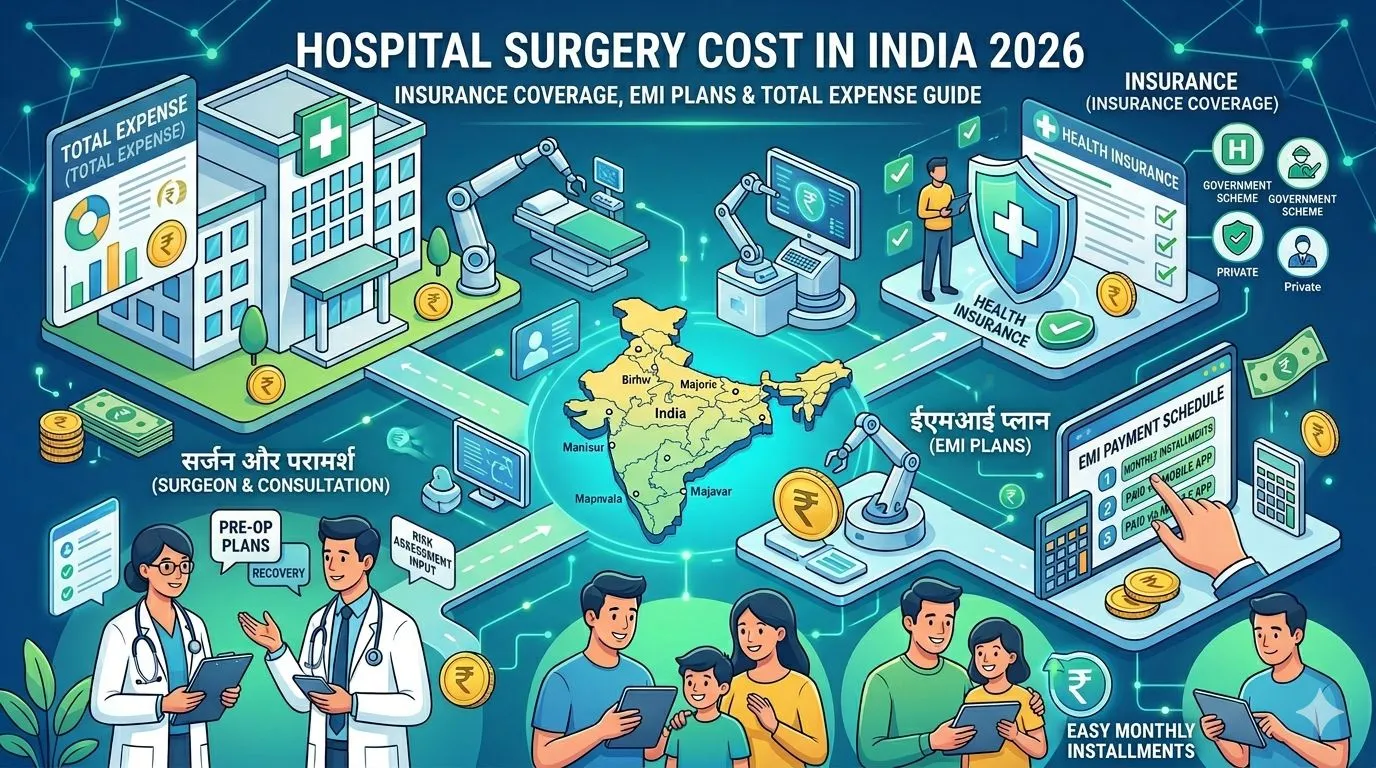
Healthcare in India has improved rapidly over the past decade, but one thing that still worries most families is the cost of surgery. Whether it is a planned operation or an emergency procedure, hospital bills can quickly become a financial burden if not managed properly.
In 2026, surgery costs in India vary widely depending on the type of procedure, hospital category, city, doctor expertise, and additional services. Understanding these costs in advance can help individuals and families prepare financially, choose the right hospital, and make better decisions regarding insurance and payment options.
This detailed guide explains everything you need to know about hospital surgery costs in India in 2026, including cost breakdowns, insurance coverage, EMI options, hidden charges, and smart financial planning strategies.
Understanding Surgery Costs in India
Surgery cost is not a single fixed amount. It includes multiple components that together form the final hospital bill. Many people assume that surgery cost only includes the doctor’s fee, but in reality, it involves several other expenses.
Key Components of Surgery Cost
Hospital bills generally include the following:
Surgeon’s fees
Anesthesia charges
Operation theatre charges
Room rent (general ward, semi-private, or private room)
ICU charges (if required)
Medicines and consumables
Diagnostic tests (before and after surgery)
Nursing and staff charges
Each of these factors can significantly impact the total cost of surgery.
Average Surgery Cost in India 2026
Below is an estimated cost range for common surgeries in India. These are average figures and may vary depending on hospital and city.
Cost Table (Estimated 2026)
| Surgery Type | Government Hospital (₹) | Private Hospital (₹) |
| Appendicitis Surgery | 15,000 – 40,000 | 60,000 – 1,50,000 |
| Gallbladder Surgery | 25,000 – 60,000 | 80,000 – 2,00,000 |
| Hernia Surgery | 20,000 – 50,000 | 70,000 – 1,80,000 |
| Knee Replacement | 80,000 – 1,50,000 | 2,50,000 – 5,50,000 |
| Heart Bypass Surgery | 1,50,000 – 3,00,000 | 3,50,000 – 7,00,000 |
| Cataract Surgery | 10,000 – 30,000 | 40,000 – 1,20,000 |
These figures highlight how private hospitals can be significantly more expensive than government facilities.
City-Wise Surgery Cost Difference
Location plays a major role in determining hospital costs.
Metro Cities (Delhi, Mumbai, Bangalore)
Higher hospital charges
Premium doctor fees
Advanced medical technology
Tier-2 Cities
Moderate cost
Good quality treatment available
Tier-3 Cities
Lower cost
Limited advanced facilities
For example, a surgery costing ₹3 lakh in Mumbai may cost ₹1.8–2.2 lakh in a smaller city.
Private vs Government Hospital: Cost Comparison
Choosing between a private and government hospital is one of the biggest decisions patients face.
Government Hospitals
Low cost or free treatment
Long waiting time
Limited facilities in some cases
Private Hospitals
Faster treatment
Better comfort and facilities
Higher charges
In 2026, private hospitals dominate in terms of infrastructure and speed, but government hospitals remain the most affordable option.
ICU and Room Charges Breakdown
Hospital stay is a major part of surgery cost.
Room Charges (Per Day)
General Ward: ₹1,000 – ₹3,000
Semi-Private Room: ₹3,000 – ₹7,000
Private Room: ₹7,000 – ₹20,000
ICU Charges (Per Day)
₹10,000 – ₹50,000 depending on hospital
Longer hospital stays can significantly increase the total bill.
Hidden Charges in Hospital Bills
Many patients are surprised by additional costs that are not clearly explained at the beginning.
Common hidden charges include:
Medical consumables (gloves, syringes, PPE kits)
Extra diagnostic tests
Doctor visit fees
Emergency handling charges
Post-surgery follow-up
Always ask for a detailed estimate before surgery to avoid unexpected expenses.
Health Insurance and Surgery Costs
Health insurance plays a crucial role in reducing the financial burden of surgery.
What Insurance Covers
Hospitalization expenses
Surgery charges
ICU costs
Doctor fees
Medicines during hospital stay
What Insurance May Not Cover
Pre-existing diseases (initial waiting period)
Cosmetic surgeries
Non-medical expenses
In 2026, most insurance providers offer cashless hospitalization in network hospitals, which means patients do not have to pay upfront.
Cashless Treatment Process
Cashless treatment is one of the biggest benefits of health insurance.
Steps Involved
Choose a network hospital
Show insurance card at admission
Hospital sends approval request
Insurance company approves claim
Treatment starts without upfront payment
This process helps patients focus on recovery rather than finances.
EMI Options for Surgery Cost
Not everyone has sufficient savings or insurance. In such cases, EMI options can help manage expenses.
Medical Loan Features
Instant approval in many cases
Flexible EMI tenure (6–60 months)
Interest rates based on credit score
Monthly EMI Example
For a ₹3 lakh surgery loan:
6 months EMI: ₹52,000 approx
12 months EMI: ₹27,000 approx
24 months EMI: ₹14,000 approx
EMI makes it easier to handle high-cost surgeries without financial stress.
Importance of Credit Score
Your credit score affects your eligibility for medical loans.
Higher score (750+) = Lower interest rate
Lower score = Higher interest rate or rejection
Maintaining a good credit score is important for financial flexibility.
Financial Planning for Surgery
Planning ahead can reduce financial stress during medical emergencies.
Smart Strategies
Buy health insurance early
Maintain emergency savings
Compare hospital costs before treatment
Understand policy coverage
Avoid unnecessary premium services
Being financially prepared ensures better decision making during critical situations.
Tips to Reduce Surgery Cost
You can reduce hospital expenses by following some practical steps:
Choose network hospitals under insurance
Opt for semi-private rooms instead of private rooms
Compare multiple hospitals before final decision
Ask for package pricing for surgery
Avoid unnecessary add-ons
Small decisions can lead to significant savings.
Future Trends in Hospital Costs (2026 and Beyond)
Healthcare costs are expected to rise due to:
Advanced medical technology
Increasing demand for quality healthcare
Inflation in medical services
However, digital health platforms, AI-based diagnosis, and insurance expansion may help control costs to some extent.
Frequently Asked Questions (FAQ 2026)
1. What is the average surgery cost in India in 2026?
It ranges from ₹20,000 for minor surgeries to ₹7 lakh for major procedures depending on hospital and city.
2. Is health insurance necessary for surgery?
Yes, it significantly reduces financial burden and provides access to better hospitals.
3. Can I pay hospital bills in EMI?
Yes, many banks and fintech companies offer medical loans with EMI options.
4. Are government hospitals reliable?
Yes, they offer quality treatment at lower cost, but waiting time may be longer.
5. What is cashless hospitalization?
It allows patients to receive treatment without paying upfront if the hospital is in the insurance network.
Disclaimer
This article is for informational purposes only. Surgery costs mentioned are approximate estimates based on general market trends in 2026 and may vary depending on hospital, city, medical condition, and patient requirements. Always consult hospitals, doctors, and insurance providers for accurate and updated cost details before making any medical or financial decision.
Conclusion
Hospital surgery costs in India in 2026 can vary significantly based on multiple factors such as hospital type, city, medical condition, and additional services. While private hospitals offer faster and more comfortable treatment, they come with higher expenses.
Health insurance, EMI options, and proper financial planning play a crucial role in managing these costs effectively. By understanding the cost structure, comparing options, and planning in advance, individuals can ensure quality treatment without facing financial stress.
Making informed decisions today can help you and your family stay financially secure during medical emergencies in the future.