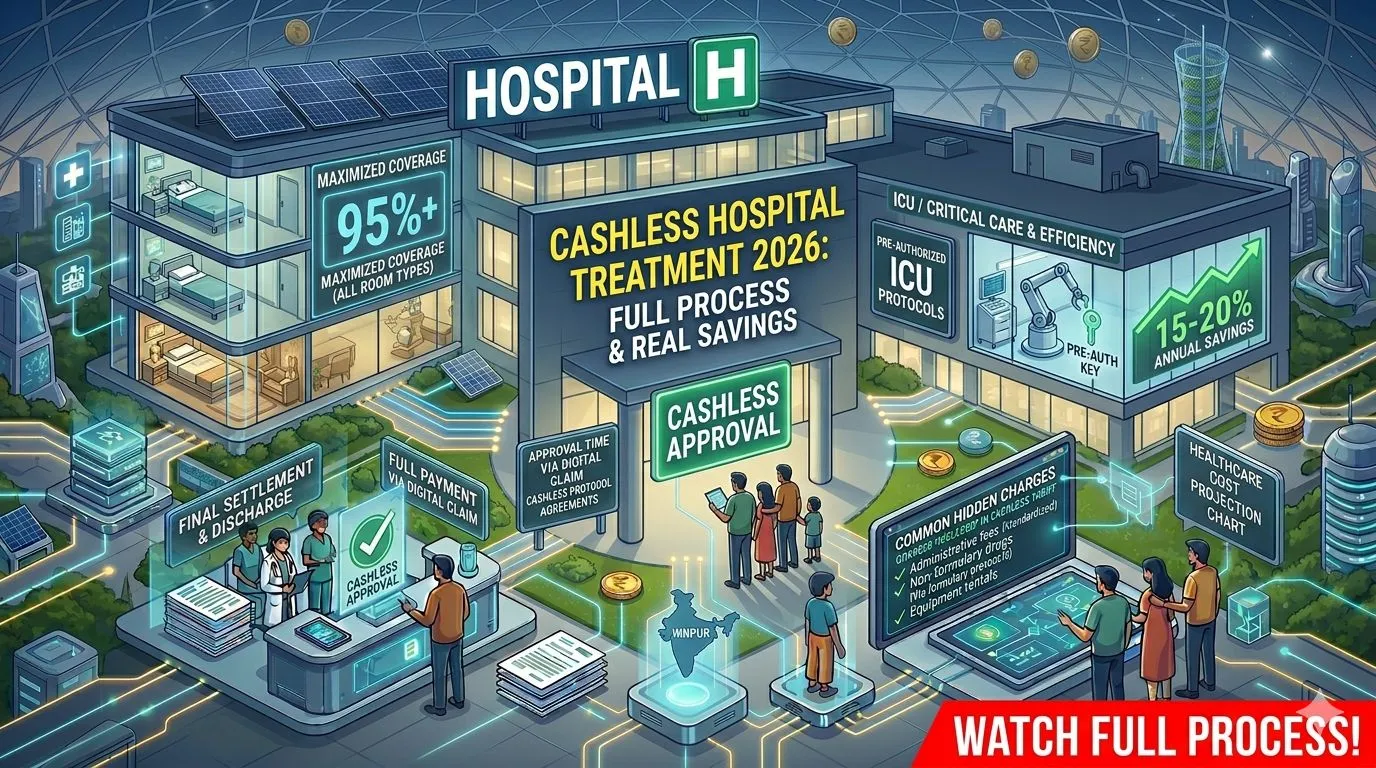
In 2026, healthcare costs in India continue to rise, making it difficult for many families to handle sudden hospital expenses. One of the most useful features of health insurance today is cashless hospital treatment, which allows patients to receive medical care without paying the full amount upfront.
However, many people still don’t fully understand how the cashless process works, how long approval takes, and how much money it actually saves. This guide explains everything in a clear and practical way so you can use this facility effectively during emergencies.
What is Cashless Hospital Treatment?
Cashless treatment means that your insurance company directly pays the hospital for your medical expenses, instead of you paying first and claiming later.
This facility is available only if:
Your hospital is part of the insurance network
Your treatment is covered under the policy
In simple terms, you focus on treatment, and the insurer handles the payment.
Why Cashless Treatment is Important in 2026
Medical emergencies can require immediate payment of ₹50,000 to ₹5 lakh or more. Not everyone has that kind of cash available instantly.
Cashless treatment solves this problem by:
Reducing financial stress
Avoiding large upfront payments
Speeding up hospital admission
Providing better access to private hospitals
It has become one of the most important features of modern health insurance.
Types of Cashless Treatment
Planned Hospitalization
When you already know about the surgery or treatment in advance.
Approval is taken before admission
Process is smoother and faster
Emergency Hospitalization
When immediate treatment is required.
Approval happens during or after admission
Slight delays may occur due to urgency
Full Cashless Process (Step-by-Step)
Understanding the process helps avoid confusion during critical situations.
Step 1: Choose a Network Hospital
Check whether the hospital is listed in your insurance provider’s network.
Step 2: Show Insurance Card
At the time of admission, provide your health insurance card and ID proof.
Step 3: Pre-Authorization Request
The hospital sends a request to the insurance company with treatment details.
Step 4: Approval from Insurance Company
The insurer reviews the request and approves the claim amount.
Step 5: Treatment Begins
Once approved, treatment continues without requiring upfront payment.
Step 6: Final Bill Settlement
Insurance company pays the hospital directly for covered expenses.
Approval Time in 2026
Approval time depends on the type of hospitalization.
Planned Treatment
2 to 6 hours (sometimes faster)
Emergency Cases
Immediate admission
Approval within 6–24 hours
Advanced digital systems in 2026 have reduced waiting time significantly.
What Expenses Are Covered?
Cashless treatment covers most major hospital expenses.
Covered Items
Room charges (within policy limit)
ICU charges
Doctor and surgeon fees
Operation theatre charges
Medicines during hospitalization
Diagnostic tests
This covers a large portion of the hospital bill.
What You Still Have to Pay
Even with cashless treatment, some expenses are not covered.
Non-Covered Expenses
Consumables (gloves, PPE kits, syringes)
Registration and admin charges
Food and personal expenses
Charges beyond policy limit
Upgraded room category
These are paid by the patient at discharge.
Real Cost Savings Example
Let’s understand with a practical example.
Total Hospital Bill: ₹4,00,000
Covered by Insurance: ₹3,20,000
Non-Covered Charges: ₹80,000
Your Payment
Only ₹80,000 instead of full ₹4 lakh
This shows how cashless treatment significantly reduces immediate financial burden.
Cashless vs Reimbursement
Cashless
No upfront payment
Direct settlement with hospital
Faster and easier
Reimbursement
You pay full amount first
Claim later from insurer
More paperwork
Cashless is always preferred, especially in emergencies.
Common Reasons for Claim Rejection
Sometimes cashless claims may be rejected.
Reasons
Treatment not covered in policy
Waiting period not completed
Incorrect or incomplete documents
Hospital not in network
Always verify policy details before treatment.
How to Increase Approval Chances
You can improve your chances of smooth approval by:
Choosing network hospitals
Providing correct documents
Informing insurer early
Understanding policy coverage
Preparation avoids last-minute issues.
Role of Room Rent Limit
Room rent limit affects claim amount.
If your policy allows ₹5,000/day
But you choose ₹10,000/day
Insurance may reduce total payout proportionally.
Always choose room within your policy limit.
Tips to Maximize Cost Savings
To get maximum benefit from cashless treatment:
Use network hospitals only
Avoid luxury room upgrades
Check policy coverage in advance
Track hospital billing daily
Ask for detailed estimate
These steps help reduce out-of-pocket expenses.
Common Mistakes to Avoid
Many people fail to use cashless benefits properly.
Mistakes
Not checking hospital network
Ignoring policy terms
Choosing higher room category
Delaying insurance intimation
Avoiding these ensures smooth experience.
Future of Cashless Treatment (2026 & Beyond)
Healthcare systems are becoming more digital and efficient.
Instant claim approvals
AI-based claim processing
Paperless documentation
Faster settlements
In the future, cashless treatment may become even more seamless.
FAQ (2026)
1. Is cashless treatment completely free?
No, some non-covered expenses must be paid.
2. Can I use cashless in any hospital?
No, only in network hospitals.
3. How fast is approval?
Usually within a few hours, depending on case.
4. What if approval is delayed?
Hospital may ask for deposit temporarily.
5. Is cashless better than reimbursement?
Yes, especially for emergencies.
Disclaimer
This article is for informational purposes only. Cashless treatment processes, approval time, and coverage details may vary depending on insurance provider, hospital policies, and individual cases in 2026. Always confirm with your insurer and hospital before treatment.
Conclusion
Cashless hospital treatment in 2026 is one of the most valuable features of health insurance. It allows patients to receive timely medical care without worrying about immediate payment.
However, it is important to understand that not all expenses are covered. Knowing the process, approval time, and coverage limits helps you avoid surprises and manage your finances better.
The best approach is to stay informed, choose the right insurance plan, and always be prepared. This ensures that during a medical emergency, your focus remains on recovery—not on arranging money.