
Medical emergencies are unpredictable and often come with a heavy financial burden. In 2026, hospital bills for emergency treatment in India can quickly rise from a few thousand rupees to several lakhs within days. Whether it is an accident, heart attack, ICU admission, or critical illness, immediate treatment is necessary—and so is immediate financial readiness.
Many families struggle not because treatment is unavailable, but because they are unprepared for the sudden cost. This detailed guide explains how emergency hospital bills are structured, how much you may need to pay, and most importantly, how to manage these expenses using insurance, EMI options, and smart financial strategies.
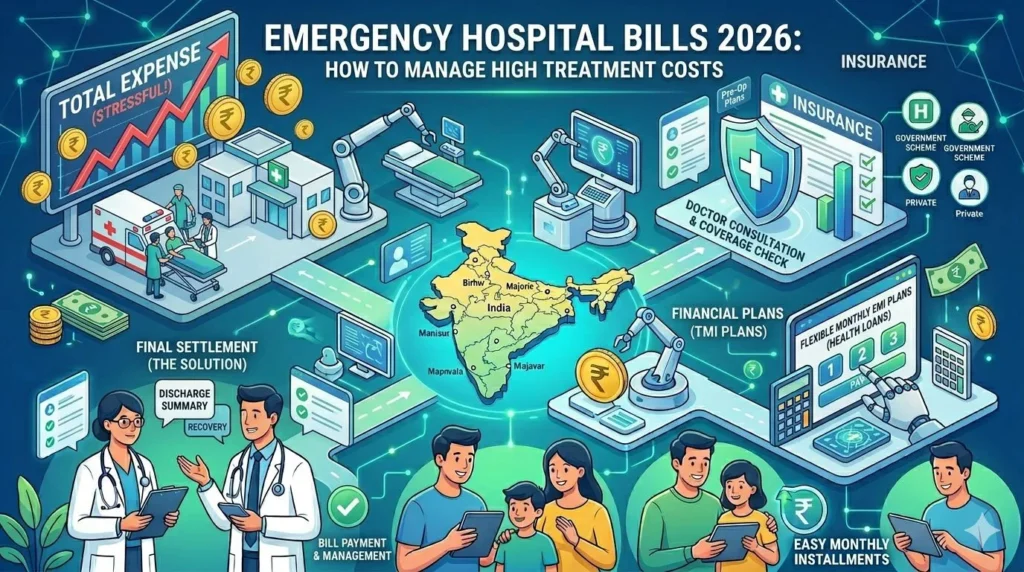
Understanding Emergency Hospital Bills
Emergency hospital bills are usually higher than planned treatment costs because they involve urgent care, immediate diagnosis, and intensive monitoring.
Unlike scheduled surgeries, emergency treatments do not allow time to compare hospitals or negotiate costs. As a result, expenses can escalate quickly.
Key Components of Emergency Bills
Emergency hospital bills typically include:
Emergency admission charges
Doctor consultation fees
Diagnostic tests (X-ray, CT scan, blood tests)
ICU or emergency room charges
Medicines and injections
Monitoring equipment
Nursing and staff charges
Each of these adds up to create a high total bill within a short period.
Average Emergency Hospital Cost in India 2026
The cost of emergency treatment depends on the severity of the condition, hospital type, and duration of stay.
Estimated Cost Breakdown
| Treatment Type | Cost Range (₹) |
| Basic Emergency Visit | 2,000 – 10,000 |
| Accident Treatment | 50,000 – 3,00,000 |
| ICU Stay (Per Day) | 10,000 – 50,000 |
| Heart Attack Treatment | 1,50,000 – 5,00,000 |
| Emergency Surgery | 1,00,000 – 6,00,000 |
Even a 3–5 day ICU stay can cost ₹1–2 lakh, making emergency planning essential.
Why Emergency Bills Are So High
Emergency healthcare involves advanced medical infrastructure and immediate attention.
Major Cost Factors
Use of life-saving equipment
Highly specialized doctors
24/7 medical staff
Urgent diagnostic tests
ICU monitoring
All these services increase the cost significantly compared to regular treatment.
ICU Charges: The Biggest Expense
ICU (Intensive Care Unit) is often the most expensive part of emergency treatment.
ICU Cost Per Day
₹10,000 – ₹50,000 per day depending on hospital
Additional ICU Expenses
Ventilator charges
Special medicines
Continuous monitoring
Doctor visits
If a patient stays in ICU for multiple days, the bill can easily cross ₹2–3 lakh.
Hidden Charges in Emergency Bills
Emergency bills often include additional costs that are not immediately visible.
Common Hidden Charges
Emergency handling fees
Medical consumables (gloves, PPE kits, syringes)
Extra tests and scans
Ambulance charges
Late-night or urgent consultation fees
Always ask for a detailed bill breakdown before discharge.
Health Insurance in Emergency Situations
Health insurance is one of the most effective ways to handle emergency hospital bills.
What Insurance Covers
Hospitalization expenses
ICU charges
Doctor fees
Medicines during treatment
What Insurance May Not Cover
Non-medical items
Some consumables
Expenses beyond policy limit
In 2026, most insurance providers offer cashless emergency treatment in network hospitals.
Cashless Emergency Treatment Process
Cashless treatment allows you to receive medical care without paying upfront.
Steps
Go to a network hospital
Show insurance card
Hospital sends approval request
Insurance company approves claim
Treatment continues without immediate payment
This process reduces financial stress during emergencies.
What If You Don’t Have Insurance?
Not having insurance can make emergency bills difficult to manage. However, there are still options available.
Alternatives
Medical loans
Credit card EMI
Borrowing from family or friends
Employer health benefits
Combining these options can help manage large bills.
Medical Loan for Emergency Bills
Medical loans are a practical solution for high emergency expenses.
Features
Quick approval (often within 24 hours)
No collateral required
Flexible EMI options
Example EMI Calculation
Loan Amount: ₹3,00,000
Interest Rate: 12%
Tenure: 24 months
Monthly EMI: approx ₹14,100
Medical loans allow patients to focus on treatment instead of immediate payment.
EMI / Monthly Cost Planning
Breaking down hospital bills into EMI helps reduce financial pressure.
EMI Table Example
| Loan Amount | Tenure | EMI (Approx) |
| ₹1 Lakh | 12 Months | ₹8,800 |
| ₹3 Lakh | 24 Months | ₹14,100 |
| ₹5 Lakh | 36 Months | ₹16,600 |
Longer tenure lowers EMI but increases total interest cost.
Importance of Emergency Fund
An emergency fund is one of the best ways to handle sudden hospital expenses.
Recommended Savings
At least 3–6 months of income
Having a dedicated emergency fund reduces dependence on loans.
Tips to Reduce Emergency Hospital Bills
Even in emergencies, you can take steps to control costs.
Practical Tips
Choose insurance network hospitals
Avoid unnecessary premium rooms
Ask for package estimates if possible
Track daily billing
Use generic medicines if available
Small decisions can make a big difference.
Common Mistakes to Avoid
Many people increase their financial burden due to poor decisions during emergencies.
Mistakes
Ignoring insurance coverage details
Not checking hospital billing
Taking high-interest loans without comparison
Delaying financial planning
Avoiding these mistakes can save a significant amount of money.
Future Trends in Emergency Healthcare Costs (2026)
Healthcare costs are expected to increase due to:
Advanced medical technology
Higher demand for quality care
Inflation in hospital services
However, improvements in insurance coverage and digital healthcare may help manage costs better.
FAQ (2026)
1. How much does an emergency hospital visit cost in India?
It can range from ₹2,000 to ₹5 lakh depending on severity and treatment.
2. Is ICU always required in emergencies?
No, only critical cases require ICU admission.
3. Can I pay emergency bills in EMI?
Yes, through medical loans or credit card EMI options.
4. Does insurance cover emergency treatment?
Yes, most policies cover emergencies under hospitalization benefits.
5. What is the best way to prepare for emergencies?
Health insurance + emergency fund + financial planning.
Disclaimer
This article is for informational purposes only. All cost estimates, EMI examples, and financial details mentioned are approximate and may vary depending on hospital, city, medical condition, and financial institution policies in 2026. Always consult hospitals, insurance providers, or financial experts for accurate and updated information.
Conclusion
Emergency hospital bills in 2026 can be financially overwhelming if you are not prepared. With rising healthcare costs, even a short hospital stay can result in expenses running into lakhs.
The best way to manage these costs is through a combination of health insurance, emergency savings, and medical loan options. Understanding how hospital bills are structured and planning ahead can help you make better decisions during critical situations.
Being financially prepared ensures that during an emergency, your focus remains on recovery—not on how to pay the bill.