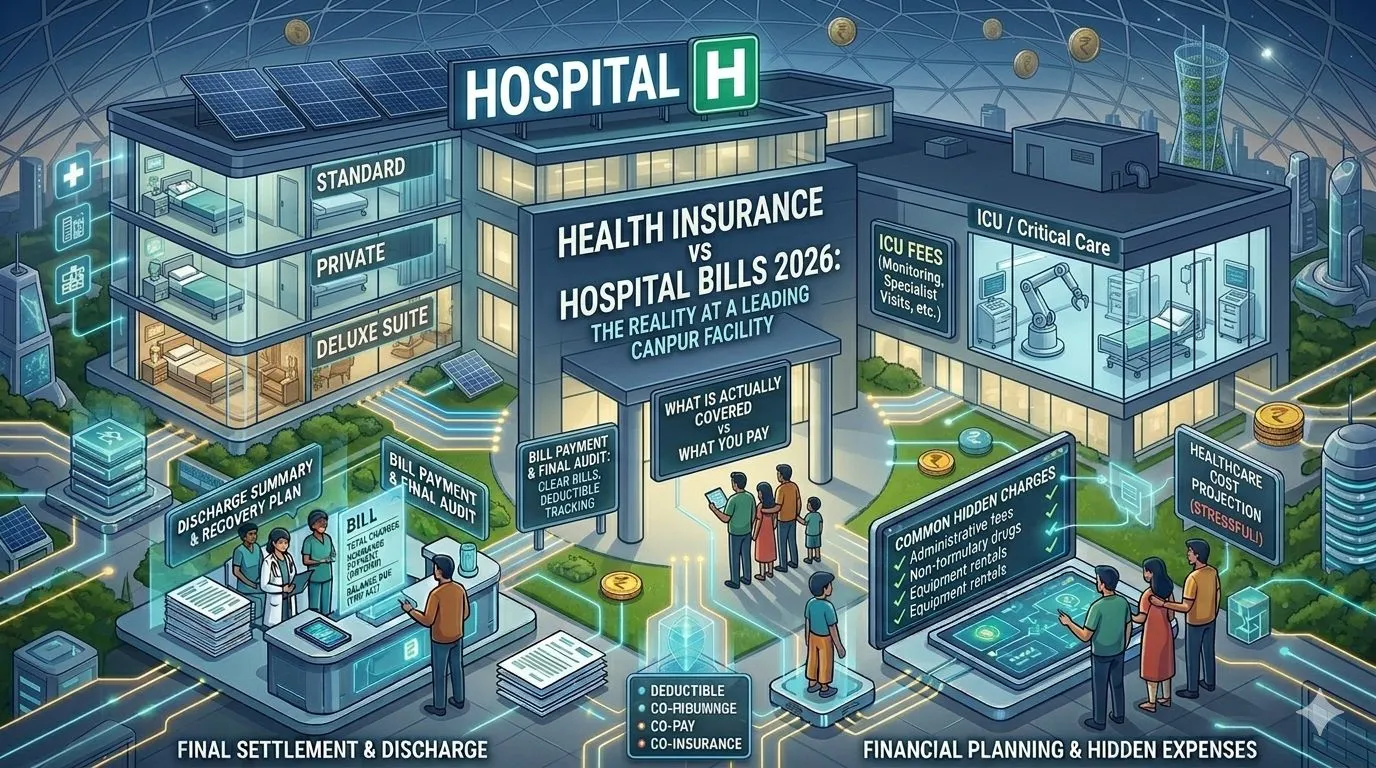
In 2026, healthcare costs in India have reached a level where even a short hospital stay can put serious pressure on your finances. While health insurance is often seen as a safety net, many people still get confused at the time of claim settlement—especially when they realize that not everything is covered.
Understanding the gap between health insurance coverage and actual hospital bills is extremely important. This guide will clearly explain what insurance really pays for, what you still need to pay out of your pocket, and how to plan smartly to avoid financial stress.
Why This Topic Matters in 2026
Medical inflation is rising every year. A treatment that cost ₹2 lakh a few years ago may now cost ₹4–5 lakh. At the same time, many insurance policies have limits, conditions, and exclusions.
This creates a situation where:
You have insurance, but still pay a large amount
Hospital bills include charges not covered by insurance
Policy terms affect claim approval
Understanding this difference is the key to financial safety.
What Health Insurance Actually Covers
Health insurance is designed to cover major hospitalization expenses. However, coverage depends on your policy type, sum insured, and terms.
Commonly Covered Expenses
Hospital room charges (within limit)
ICU charges
Doctor consultation and surgeon fees
Operation theatre charges
Medicines during hospitalization
Diagnostic tests related to treatment
If your policy is strong and the hospital is in-network, a major portion of the bill can be covered.
What Health Insurance Does NOT Fully Cover
This is where most people get surprised. Even with insurance, some costs are either partially covered or not covered at all.
Common Non-Covered Expenses
Registration and admission charges
Consumables (gloves, PPE kits, syringes)
Attendant charges
Food and personal expenses
Cosmetic procedures
Charges beyond room rent limit
These are called out-of-pocket expenses.
Hospital Bill Breakdown Example (2026)
Let’s understand with a realistic example:
Total Hospital Bill: ₹3,50,000
Room Rent: ₹60,000
ICU Charges: ₹80,000
Doctor Fees: ₹70,000
Medicines: ₹50,000
Consumables: ₹30,000
Other Charges: ₹60,000
Insurance Pays:
₹2,70,000 (covered items)
You Pay:
₹80,000 (non-covered + extra charges)
This shows that even with insurance, you may still need to pay a significant amount.
Room Rent Limit Impact
Room rent limit is one of the most important factors.
Example
If your policy allows ₹5,000/day
But you choose ₹10,000/day room
Then:
Insurance will proportionally reduce other payments
You will pay a larger share
This is known as proportionate deduction.
Cashless vs Reimbursement Claim
Cashless Claim
Treatment in network hospital
Insurance pays hospital directly
Less upfront payment
Reimbursement Claim
You pay first
Later claim from insurance
More paperwork
Cashless is always more convenient in emergencies.
Hidden Charges That You Pay
Even in cashless treatment, some costs are not covered.
Common Hidden Costs
Medical consumables
Extra nursing charges
Additional doctor visits
Non-medical items
Administrative fees
These can add ₹10,000–₹50,000 easily.
Pre & Post Hospitalization Coverage
Insurance does not only cover hospital stay.
Covered Period
Pre-hospitalization: 30–60 days
Post-hospitalization: 60–90 days
Includes tests, medicines, and follow-ups related to treatment.
Waiting Period & Exclusions
Insurance policies have conditions that affect claims.
Common Waiting Periods
Pre-existing diseases: 2–4 years
Specific treatments: 1–2 years
Exclusions
Cosmetic surgery
Self-inflicted injuries
Non-medical treatments
Always read policy terms carefully.
How Much Should You Be Insured?
In 2026, choosing the right coverage amount is crucial.
Recommended Coverage
Individual: ₹5–10 lakh
Family: ₹10–20 lakh
Higher coverage reduces out-of-pocket expenses.
What If Insurance Is Not Enough?
If your insurance does not fully cover the bill, you have options.
Options
Medical loan
Credit card EMI
Emergency savings
Combining these can help manage large expenses.
EMI / Monthly Cost Example
If you take a loan for remaining ₹1 lakh:
12 months EMI: approx ₹8,800
24 months EMI: approx ₹4,700
EMI reduces immediate burden but adds interest cost.
Tips to Reduce Out-of-Pocket Expenses
You can minimize your own payment with smart planning.
Practical Tips
Choose network hospitals
Select room within policy limit
Check policy coverage before admission
Ask for cost estimate
Keep emergency fund
These steps can save a significant amount.
Common Mistakes to Avoid
Many people make mistakes that increase their financial burden.
Mistakes
Ignoring policy terms
Choosing expensive room unnecessarily
Not checking coverage limits
Delaying claim submission
Avoiding these can improve your claim experience.
Future Trends in 2026
Health insurance is evolving rapidly.
Digital claim processing
AI-based approvals
Better coverage plans
Faster settlements
This will improve transparency and reduce claim issues.
FAQ (2026)
1. Does health insurance cover full hospital bill?
No, it depends on policy terms and coverage limits.
2. What is out-of-pocket expense?
The amount you pay yourself after insurance.
3. Is cashless treatment completely free?
No, some charges are still payable.
4. Can I upgrade my insurance?
Yes, you can increase coverage during renewal.
5. What is the biggest mistake people make?
Not understanding policy coverage details.
Disclaimer
This article is for informational purposes only. Insurance coverage, claim amounts, and costs mentioned are approximate and may vary depending on policy, hospital, and individual case in 2026. Always verify details with your insurance provider before making decisions.
Conclusion
Health insurance is essential in 2026, but it is not a complete solution for all hospital expenses. While it covers major costs, several charges still need to be paid by the patient.
Understanding what is covered and what is not can help you avoid financial surprises. The best approach is to combine adequate insurance coverage + emergency savings + smart financial planning.
Being aware today ensures that during a medical emergency, your focus remains on recovery—not on unexpected bills.