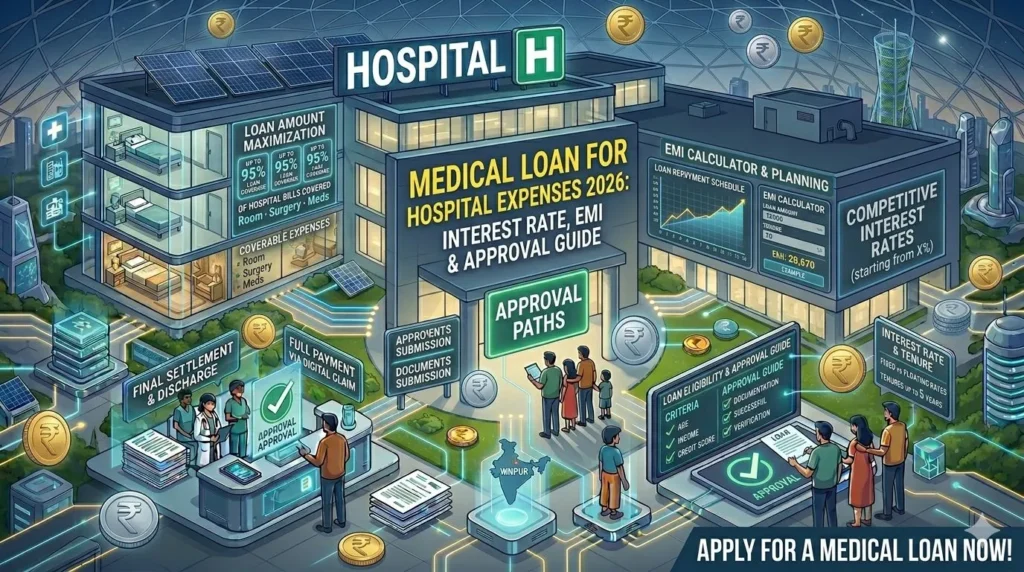
Healthcare costs in India are rising rapidly, and in many cases, medical emergencies come without warning. Whether it is a surgery, ICU admission, cancer treatment, or organ transplant, the cost can range from a few lakhs to even ₹30 lakh or more. In such situations, medical loans have become one of the most important financial tools in 2026.
A medical loan is designed specifically to help individuals cover hospital expenses without delaying treatment. Unlike traditional loans, these are faster, more flexible, and often require minimal documentation. This guide explains everything you need to know about medical loans in 2026, including cost structure, EMI planning, interest rates, eligibility, and financial strategies.
What is a Medical Loan?
A medical loan is a type of personal loan used to pay for healthcare expenses. It provides immediate funds for treatment when savings or insurance are not enough.
Medical loans can be used for:
Surgery and hospitalization
ICU and emergency treatment
Cancer and critical illness care
Organ transplant expenses
Diagnostic tests and medicines
In 2026, medical loans are widely used because treatment costs can reach ₹3–30 lakh depending on the condition and hospital.
Why Medical Loans Are Important in 2026
Medical emergencies require immediate action. Waiting for funds can be risky or even life-threatening. Medical loans solve this problem by providing quick access to money.
Key Reasons
Instant financial support
No need to delay treatment
Covers expenses beyond insurance
Flexible EMI repayment options
Available for both planned and emergency surgeries
Many families now combine health insurance + medical loan to fully cover hospital expenses.
Types of Medical Loans Available
In 2026, different types of medical loans are available depending on your needs.
1. Personal Medical Loan
Unsecured loan with no collateral
Used for general treatment expenses
2. Hospital Tie-Up Loan
Offered directly through hospitals
Instant approval and quick disbursement
3. Credit Card EMI for Medical Bills
Convert hospital bill into EMI
Useful for short-term expenses
4. Specialized Healthcare Financing
Provided by NBFCs and fintech companies
Faster approval but higher interest
Medical Loan Interest Rate in India 2026
Interest rates vary depending on lender, credit score, and income.
Interest Rate Table (2026)
| Loan Type | Interest Rate (Approx.) |
| Bank Personal Loan | 10% – 15% |
| NBFC Medical Loan | 12% – 22% |
| Fintech Instant Loan | 14% – 24% |
These rates depend heavily on your credit profile and repayment capacity.
Some lenders offer loans starting from around 11.49% per year, especially for salaried individuals.
EMI / Monthly Cost Calculation
EMI (Equated Monthly Installment) is the monthly amount you pay to repay your loan.
Example EMI Calculation
Loan Amount: ₹5,00,000
Interest Rate: 12%
Tenure: 2 Years
Monthly EMI: approx ₹23,500
EMI Table
| Loan Amount | Tenure | Interest | EMI (Approx) |
| ₹2 Lakh | 12 Months | 12% | ₹17,800 |
| ₹5 Lakh | 24 Months | 12% | ₹23,500 |
| ₹10 Lakh | 36 Months | 13% | ₹33,700 |
EMI depends on loan amount, interest rate, and tenure. Longer tenure reduces EMI but increases total interest.
Eligibility Criteria for Medical Loan
To apply for a medical loan in 2026, you must meet basic eligibility conditions.
Common Requirements
Age: 21–65 years
Stable income (job or business)
Minimum credit score (700+)
Hospital cost estimate or documents
Higher income and better credit score increase approval chances and reduce interest rates.
Documents Required
Basic documentation is required for loan approval:
Identity proof (Aadhar, PAN)
Address proof
Income proof (salary slip or ITR)
Bank statements
Hospital estimate or medical reports
Digital lenders may approve loans with minimal paperwork.
Loan Approval Process
Medical loans are designed for quick approval.
Step-by-Step Process
Apply online or through lender
Upload documents
Credit score check
Loan approval
Amount disbursed to bank or hospital
In many cases, approval happens within 24–48 hours.
What Medical Loans Cover
Medical loans can cover almost all hospital-related expenses.
Surgery cost
Hospital room charges
ICU expenses
Medicines and tests
Doctor fees
Post-treatment care
This makes them a complete solution for healthcare financing.
Medical Loan vs Health Insurance
Understanding the difference is important for financial planning.
Health Insurance
Covers predefined amount
Cashless treatment available
Limited coverage
Medical Loan
Covers remaining expenses
No coverage limit (based on eligibility)
Requires EMI repayment
Best strategy: Use both together
Advantages of Medical Loans
Medical loans offer several benefits:
Quick approval
No collateral required
Flexible repayment options
Covers high-cost treatments
Available even without insurance
Disadvantages of Medical Loans
Despite benefits, there are some risks:
Interest cost increases total expense
EMI burden on monthly income
High rates for low credit score
Always calculate repayment ability before taking a loan.
Factors That Affect Loan Approval
Several factors determine whether your loan will be approved.
Key Factors
Credit score
Monthly income
Existing loans
Employment stability
Loan amount
Higher risk profile = higher interest rate.
Tips to Get Low Interest Medical Loan
You can reduce your loan cost by following smart strategies:
Maintain credit score above 750
Choose shorter tenure
Compare multiple lenders
Avoid unnecessary high loan amount
Use insurance first
Common Mistakes to Avoid
Many people make costly mistakes while taking medical loans.
Taking loan without comparing rates
Choosing long tenure unnecessarily
Ignoring hidden charges
Not checking EMI affordability
Avoiding these mistakes can save thousands of rupees.
Future of Medical Loans in India
In 2026 and beyond, medical financing is expected to grow rapidly.
Digital loan approvals
AI-based credit assessment
Instant hospital financing
Lower processing time
Healthcare and fintech industries are working together to make treatment more accessible.
FAQ (2026)
1. What is the maximum amount for a medical loan?
It can range from ₹50,000 to ₹30 lakh depending on income and eligibility.
2. How fast can I get a medical loan?
Some lenders approve within 24 hours.
3. Is collateral required?
No, most medical loans are unsecured.
4. Can I get a loan without insurance?
Yes, medical loans do not require insurance.
5. What happens if I miss EMI?
Penalty charges and credit score impact may occur.
Disclaimer
This article is for informational purposes only. Interest rates, EMI values, and loan terms mentioned are approximate and may vary depending on lender, borrower profile, and market conditions in 2026. Always verify details with banks or financial institutions before applying for a loan.
Conclusion
Medical loans have become an essential financial solution in 2026, helping individuals manage rising hospital expenses without delaying treatment. With flexible EMI options, fast approval, and wide coverage, they provide immediate financial relief during critical situations.
However, it is important to borrow wisely. Understanding interest rates, EMI structure, and repayment capacity can help you avoid financial stress in the future.
The best approach is to combine health insurance + medical loan + proper planning. This ensures that you and your family are financially secure even during medical emergencies.
Agar chaho to next main is topic ko ultra high-CPM landing page + ads placement strategy me convert kar deta hoon jisse tumhari earning aur boost ho jayegi 💰🚀